
How to Plan Today for Tomorrow’s Truck Replacement Costs
Think back to the last time a truck broke down unexpectedly. If you didn’t already have the funds set aside to replace it, you felt the impact immediately. That’s not just an inconvenience—it’s a planning problem.
The reality is simple: your trucks will fail. The only question is whether you’ll be financially ready when they do.
This is where proactive planning becomes essential. Instead of reacting to breakdowns, you can build those future costs directly into your pricing today.
The Only Place the Money Comes From
In most service-based businesses, there’s really only one place to recover your operational costs: your labor rate.
Yes, material markup can offset a portion of overhead. But the majority of your business expenses—including future equipment replacement—must be covered through what you charge for labor.
That means if you’re not accounting for future expenses in your labor rate, you’re underpricing your work.
Turning Future Costs Into Today’s Pricing
You may not need to replace a truck for another two, three, or even four years. But waiting until that moment to figure out how to pay for it is risky.
Instead, the goal is to spread that cost over time.
By planning ahead, you gradually build a reserve so that when a vehicle needs to be replaced, the money is already there—no scrambling, no financing surprises, no disruption to your business.
A Practical Example
Let’s say you evaluate one of your service vehicles and estimate:
- It will last three more years
- It will cost $40,000 to replace
Rather than worrying about that $40,000 later, you divide it across the time you have left.
That means setting aside roughly $1,111 per month starting now.
By the time the truck reaches the end of its life, you’ve already accumulated the full replacement cost.
Time becomes your advantage. The more lead time you have, the less financial strain you feel.
What to Include in Replacement Costs
When calculating the cost of a new vehicle, it’s important to think beyond just the purchase price.
A realistic estimate should include:
- Vehicle cost (new or used, depending on your strategy)
- Upfitting (ladder racks, shelving, storage systems)
- Branding (wraps or lettering)
- Any additional equipment required
You should also subtract expected trade-in value if applicable. The goal is to arrive at a net replacement cost—the true out-of-pocket expense you’ll face.
Allocating the Cost Properly
Not every department in your business should carry the same burden.
For example, if the vehicle is a service van, then your service department should absorb 100% of that replacement cost in its pricing model.
By assigning costs accurately, you ensure each part of your business is financially responsible for the assets it uses.
Building a Replacement Fund Across Your Fleet
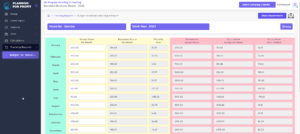
When you apply this approach across all vehicles, the numbers become significant—but manageable.
Instead of being hit with large, unpredictable expenses, you’re steadily building a structured fund.
For example, a company might allocate $75,000 per year into its pricing to cover the eventual replacement of its entire fleet.
That money is already accounted for, already collected, and already working in the background.
Why This Matters
Your vehicles are one of the largest expenses in your business—often second only to labor.
Failing to plan for their replacement leads to:
- Cash flow disruptions
- Emergency financing
- Delayed operations
- Reduced profitability
On the other hand, planning ahead gives you control. It turns a major expense into a predictable, manageable part of your business model.
Final Thoughts
Truck replacement isn’t a surprise—it’s a certainty.
The real question is whether you’ll pay for it all at once under pressure, or gradually over time through smart pricing.
By building future costs into today’s labor rates, you ensure your business is prepared, stable, and profitable—no matter when those trucks finally give out.