
Markup vs. Margin: The Costly Confusion That Could Be Hurting Your Profits
If you’re not clear on the difference between markup and margin, there’s a good chance it’s quietly costing your business money. These two terms are among the most misunderstood in the trades—and the consequences of mixing them up can be significant.
Let’s break it down in a practical, no-nonsense way so you can make better pricing decisions and protect your profitability.
Understanding the Core Difference
At a glance, markup and margin might seem interchangeable. They’re not.
-
Markup is calculated as a percentage of cost.
-
Margin (or gross margin) is calculated as a percentage of the selling price.
That distinction matters more than most people realize. Because the selling price is always higher than the cost, margin represents a larger, more accurate measure of profitability.
Why This Matters for Your Business
Your profit and loss statement already tells the story. You have:
-
Total revenue
-
Cost of goods sold (COGS)
-
Gross profit (what’s left after COGS)
That gross profit is what pays for your overhead—rent, insurance, payroll, and everything else. Only after covering those expenses do you get to keep any net profit.
Here’s the key question:
Is your gross profit enough?
It doesn’t matter how you compare to industry averages, your overhead and structure are unique. The only thing that matters is whether your pricing covers your costs and delivers the profit you need.
A Real-World Comparison
Let’s look at a simplified example.
Using Margin (Correct Approach)
-
Cost of materials: $300,000
-
Target gross margin: 40%
-
Selling price: $300,000 ÷ 0.6 = $500,000
-
Gross profit: $200,000
Now subtract overhead:
-
Overhead: $180,000
-
Net profit: $20,000
That’s a profitable job.
Using Markup (Common Mistake)
-
Cost of materials: $300,000
-
Markup: 40%
-
Selling price: $300,000 × 1.4 = $420,000
-
Gross profit: $120,000 (about 28.5%)
Now subtract the same overhead:
-
Overhead: $180,000
-
Net result: –$60,000 (a loss)
Same job. Same costs. Completely different outcome.
The Hidden Problem with Markup
Markup feels intuitive, but it consistently underestimates your true profit.
For example:
-
A 10% markup on a $1,000 job gives you a $100 profit.
-
Selling price = $1,100
-
Actual margin = $100 ÷ $1,100 = 9.09%, not 10%.
That gap may seem small, but it compounds quickly at scale.
And it gets worse as your target increases:
-
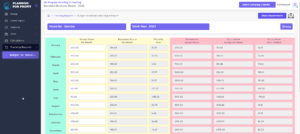
20% markup = ~17% margin
-
30% markup = ~23% margin
-
40% markup = ~29% margin
-
50% markup = ~33% margin
At higher levels, the discrepancy becomes massive—sometimes over 15%. That’s money you’re simply not collecting.
The Right Way: Pricing with Margin
To price correctly, you should use margin—not markup.
Here’s how:
-
Decide your target profit margin.
-
Subtract that percentage from 1 to get your divisor.
-
Divide your cost by that number.
Example:
-
Target margin: 10%
-
Divisor: 1 – 0.10 = 0.9
-
Cost: $1,000
-
Selling price: $1,000 ÷ 0.9 = $1,111
Now your profit is $111, which is truly 10% of the selling price.
The Bigger Picture
This isn’t just about math—it’s about survival and growth.
When you underprice using markup instead of margin, you’re effectively:
-
Underbilling customers
-
Struggling to cover overhead
-
Limiting your ability to generate real profit
And the higher your intended margin, the more damaging the mistake becomes.
Final Thoughts
You don’t need to obsess over industry averages or what other contractors are doing. What matters is this:
-
Are you pricing correctly?
-
Are you covering your costs?
-
Are you earning the profit you expect?
Understanding and using margin properly ensures you’re capturing every dollar your business needs to operate and grow.
If you’ve been relying on markup, it might be time to rethink your pricing strategy—because the difference isn’t small, and it isn’t optional.
If you would like to watch a more in depth video about this topic, check out this video from our company President, Bill Kinnard.